Problems With Asbestos Siding: What Homeowners Need to Know Before Replacing It
Problems With Asbestos Siding: What Homeowners Need to Know Before Replacing It
Problems With Asbestos Siding: What Fort Wayne Homeowners Need to Know Before Replacing It
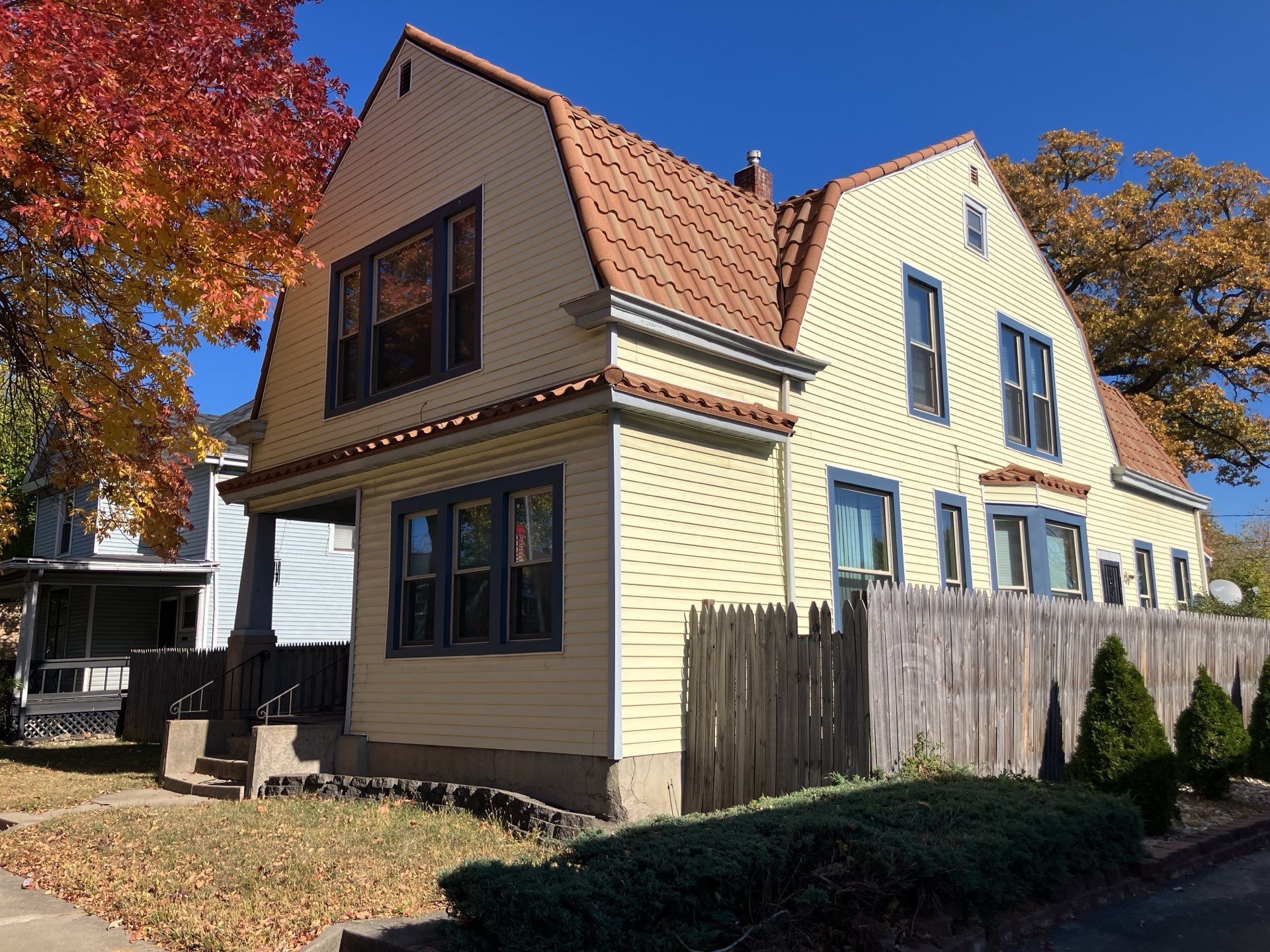
Asbestos siding is still found on many older homes throughout Fort Wayne and Northeast Indiana. It was once considered a durable, fire-resistant exterior product, but today it creates special concerns whenever a homeowner wants to repair, remove, or cover the existing siding.
The siding itself is not automatically an emergency. The greatest risk occurs when asbestos-containing material becomes damaged, cut, drilled, sanded, broken, or otherwise disturbed, allowing microscopic fibers to become airborne. Breathing those fibers can contribute to serious illnesses, including asbestosis, lung cancer, pleural disease, and mesothelioma. https://www.atsdr.cdc.gov/asbestos/health-effects/index.html?utm_source=chatgpt.com
That means asbestos siding cannot be approached like an ordinary vinyl or wood siding tear-off.
What Is Asbestos Siding?
Asbestos is a naturally occurring mineral made of extremely small, durable fibers. Because it resists heat, fire, electricity, and chemical damage, it was added to many twentieth-century building products, including cement siding shingles.
Asbestos-cement siding is generally a mixture of cement and asbestos fibers pressed into rigid shingles or panels. When intact, it is usually considered a nonfriable material, meaning it cannot easily be crushed into powder by hand. However, aging, storms, improper removal, drilling, cutting, and breakage can cause even nonfriable materials to release asbestos fibers. Indiana identifies cement siding and transite shingles as Category II nonfriable asbestos-containing materials that may become hazardous when weathered, crumbled, pulverized, or reduced to powder. https://www.in.gov/idem/asbestos/about-asbestos-containing-materials/?utm_source=chatgpt.com
What Does Asbestos Siding Look Like?
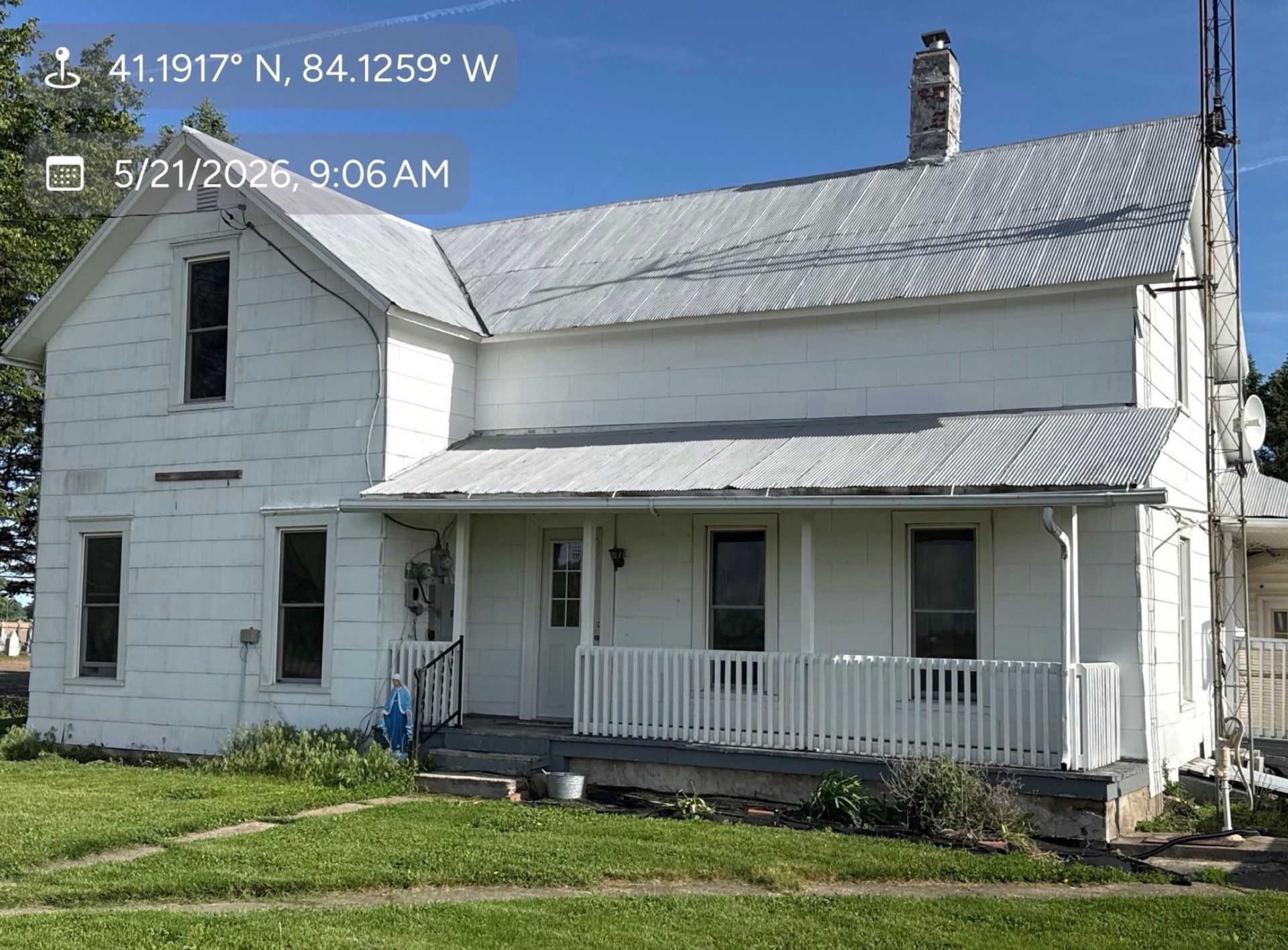
Asbestos-cement siding commonly appears as:
- Rigid, shingle-style panels
- Rectangular pieces installed in overlapping rows
- A wavy, wood-grain, or textured surface
- Brittle corners or cracked edges
- Small nail holes along the upper portion
- Gray material visible where the coating has worn away
- Older painted finishes with repeated siding patterns
Many asbestos siding shingles are approximately 12 by 24 inches, although sizes and patterns vary.
Appearance alone is not enough to confirm asbestos. Fiber-cement siding, old cement board, and other products can look nearly identical. The only reliable way to confirm whether siding contains asbestos is through proper sampling and laboratory analysis by a qualified professional.
Do not break off a piece yourself simply to have it tested. That is the exact type of disturbance homeowners should avoid.
Is Intact Asbestos Siding Dangerous?
Asbestos siding that remains intact, stable, and undisturbed may not need to be removed immediately. Indiana’s Department of Environmental Management advises that asbestos-containing materials in good condition—without peeling, cracking, crumbling, powder, or dust—are often best left alone. https://faqs.in.gov/hc/en-us/articles/360000389903-Do-I-need-to-remove-asbestos?utm_source=chatgpt.com
Problems become more likely when the siding is:
- Cracked or broken
- Severely weathered
- Loose or falling from the wall
- Drilled for fixtures or fasteners
- Cut with power tools
- Ground, sanded, or pressure washed
- Removed without proper procedures
- Damaged during a storm
- Disturbed during window, door, or siding replacement
The health concern is not merely touching an intact panel. It is releasing fibers into the air and inhaling them.
Why Asbestos Siding Cannot Be Removed Like Vinyl
A standard siding project may involve pulling panels from the wall, tossing debris into a dumpster, cutting around windows, and removing stubborn sections with hand or power tools.
Those methods cannot simply be transferred to confirmed asbestos-cement siding.
OSHA classifies the removal of asbestos-containing siding shingles as Class II asbestos work. For exterior cementitious asbestos siding, OSHA prohibits cutting, abrading, or breaking the panels unless a safer method cannot be used. Panels must be wetted before removal and carefully lowered, bagged, or wrapped rather than dropped from the wall. https://www.osha.gov/training/library/asbestos/construction?utm_source=chatgpt.com
A controlled project may require:
- A regulated work area
- Trained personnel
- Appropriate respiratory protection
- Disposable protective clothing
- Wet-removal methods
- Careful panel-by-panel removal
- Plastic wrapping or approved waste bags
- Controlled lowering of materials
- Proper cleanup and disposal
- Required documentation or notifications
The exact requirements depend on the building, siding condition, project scope, who performs the work, and the laws that apply to that property. Indiana regulates asbestos inspection, licensing, emissions, work practices, and disposal, although certain exemptions may apply to small residential buildings. https://www.in.gov/idem/asbestos/?utm_source=chatgpt.com
Option One: Professional Removal
The most complete approach is to have the asbestos-containing siding removed using proper asbestos work practices.
This may make sense when:
- The siding is severely damaged
- Panels are deteriorating or crumbling
- The wall system needs structural repair
- Water has entered behind the siding
- The existing sheathing is not nailable
- Windows or doors are being reconfigured
- The home is undergoing major renovation
- The homeowner wants the asbestos material eliminated
Removal provides access to the wall beneath the siding. That allows the contractor to inspect sheathing, framing, moisture damage, flashing, and other hidden conditions before installing the new exterior system.
The disadvantage is cost and complexity. Specialized labor, protective measures, packaging, disposal, and regulatory compliance can make asbestos removal substantially more involved than an ordinary siding tear-off.
Faze Construction can help evaluate the exterior project and coordinate with qualified asbestos professionals when specialized abatement is required.
Option Two: Encapsulating or Siding Over It
When asbestos siding is intact and the underlying wall is suitable, another possibility may be to leave the siding in place and install a properly designed covering system over it.
In simple terms, encapsulation means isolating the asbestos-containing material so it remains protected and is not readily disturbed. For an exterior remodeling project, this may involve installing an approved barrier and new siding system over the existing material.
The advantage is that intact panels do not have to be removed and handled.
However, covering asbestos siding does not make the asbestos disappear. It remains part of the house and should be documented for future owners and contractors.
A layover may not be appropriate when:
- The siding is loose or severely cracked
- The wall is uneven
- Panels are deteriorating
- Moisture is trapped behind the siding
- There is suspected mold or rot
- The sheathing cannot hold fasteners
- Window and door details cannot be flashed correctly
- The added thickness creates trim problems
- The proposed system conflicts with manufacturer requirements or code
This is why simply saying, “We can cover it,” is not enough. The contractor must first determine whether the existing wall can support a safe, functional, and warrantable siding system.
The Hidden Problem: Wood Rot Behind the Siding
One of the largest risks of covering old siding is that the visible exterior may hide damaged wood.
Older asbestos siding may have protected a home for decades, but leaks can still develop around:
- Windows
- Doors
- Corners
- Roof-to-wall intersections
- Hose bibs
- Electrical penetrations
- Light fixtures
- Deck connections
- Damaged flashing
If the sheathing behind the siding is rotted, mold-damaged, soft, or no longer capable of holding fasteners, installing another siding system over it will not solve the underlying problem.
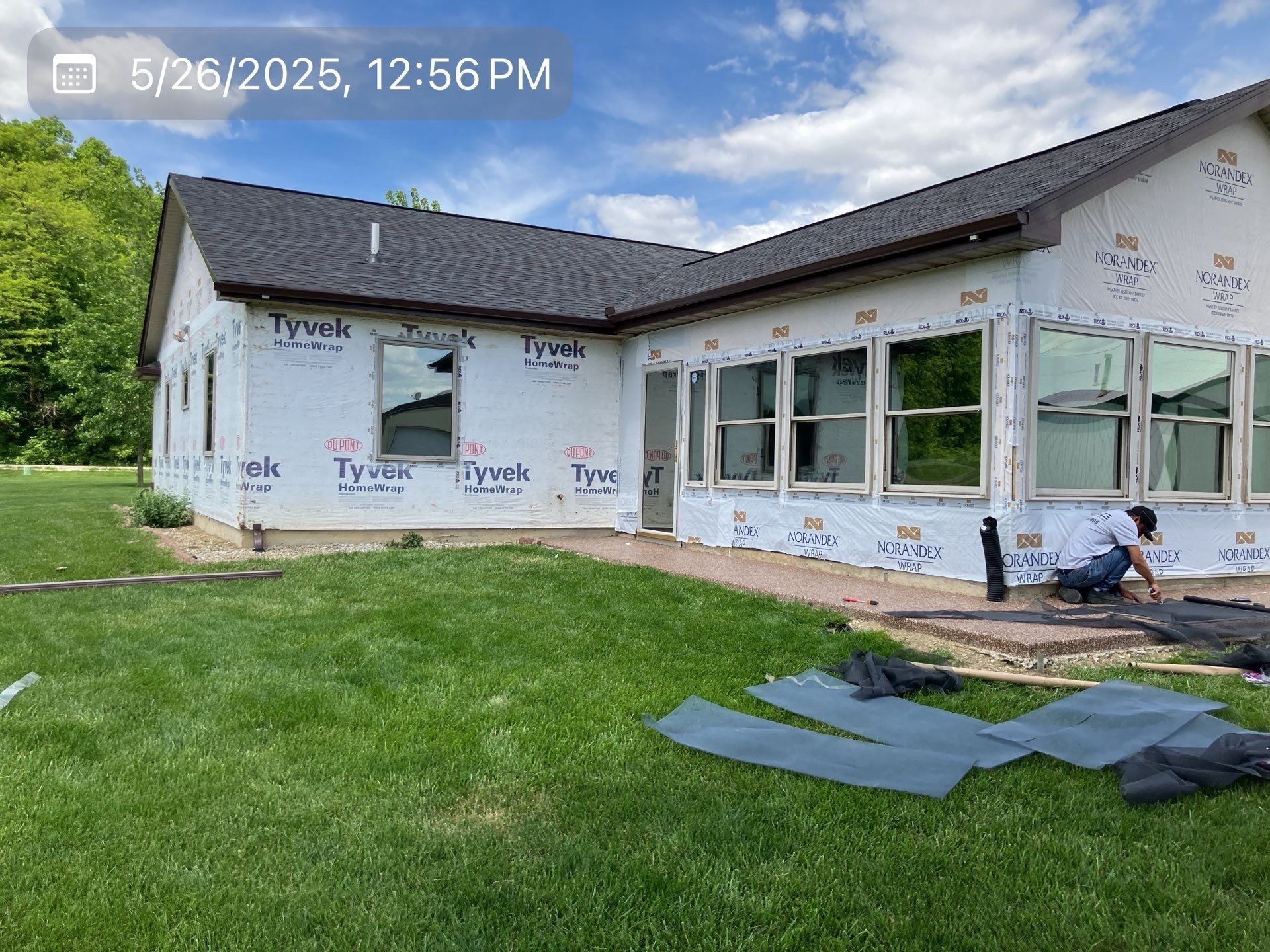
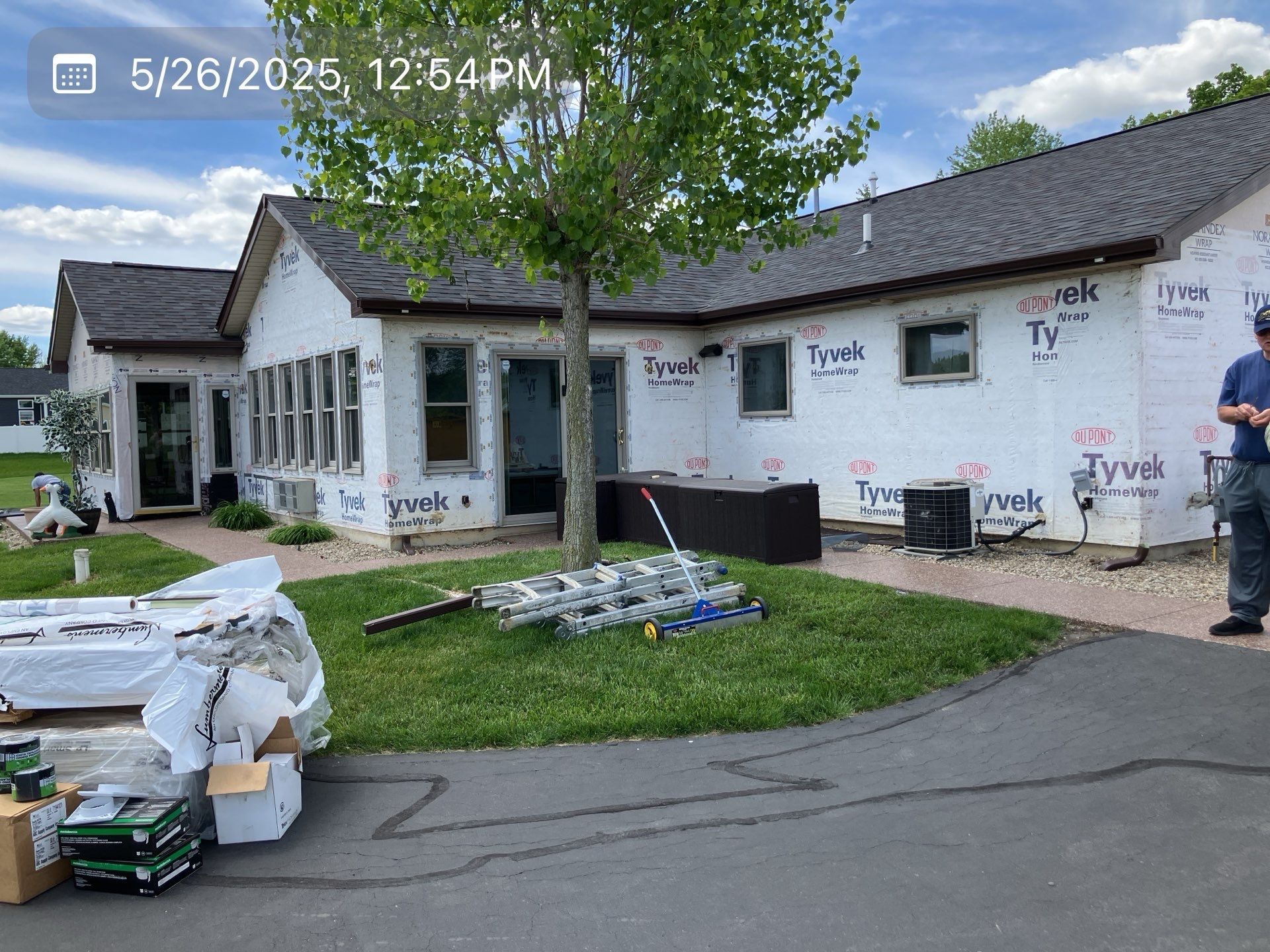
At Faze Construction, we evaluate accessible areas for signs of moisture and structural deterioration before recommending a layover. If the wall does not provide a reliable fastening surface, removal and repair may become necessary.
Is Covering Asbestos Just “Passing the Hammer”?
In one sense, yes.
Encapsulation can be a practical and responsible solution when the material is stable and the wall system is suitable. However, it also leaves the asbestos-containing material for a future homeowner or contractor to manage.
That does not automatically make encapsulation a bad decision. It means homeowners should make the decision knowingly.
Consider:
- How long do you plan to own the home?
- Is the asbestos siding currently stable?
- Is there evidence of hidden moisture?
- Will future window or door projects disturb it?
- Are you planning a major remodel later?
- Will the condition be documented for future contractors?
- Is removal financially realistic today?
- Can the new siding be correctly flashed and fastened?
The best solution depends on the condition of the siding, the intended use of the home, the construction of the wall, and the homeowner’s long-term plans.
What Homeowners Should Never Do
Homeowners should not:
- Break a panel to see what it is made of
- Sand the siding before painting
- Grind or saw through it
- Pressure wash deteriorated panels
- Drill multiple holes without a proper plan
- Throw broken asbestos siding into an ordinary debris pile
- Allow untrained laborers to smash it off the wall
- Assume a dust mask provides adequate protection
- Hide suspected asbestos from a contractor
Asbestos fibers are too small to see, and ordinary renovation activity can expose workers, residents, neighbors, and future occupants when the material is handled improperly. https://www.atsdr.cdc.gov/asbestos/health-effects/index.html?utm_source=chatgpt.com
What to Do When You Suspect Asbestos Siding
Start with these steps:
- Do not disturb it. Avoid cutting, drilling, sanding, or breaking the panels.
- Schedule an exterior evaluation. Identify siding condition, water-entry points, and visible structural concerns.
- Arrange proper testing when needed. A qualified professional can collect and submit a sample safely.
- Compare removal and encapsulation. Evaluate cost, wall condition, future plans, and warranty implications.
- Confirm applicable requirements. Indiana rules and federal worker-safety standards may affect how the project must proceed.
- Document the final system. Keep testing reports, photographs, contractor records, and disposal or encapsulation documentation.
How Faze Construction Helps
Faze Construction helps homeowners throughout Fort Wayne and Northeast Indiana understand the complete exterior system—not just the visible siding.
Our process can include:
- Exterior siding inspection
- Evaluation of visible panel deterioration
- Moisture and wood-damage review
- Nailable-surface assessment
- Window and door flashing evaluation
- Encapsulation and layover feasibility
- Coordination with asbestos specialists when removal is required
- New siding options and design recommendations
- Detailed project documentation
- Long-term exterior planning
We do not believe every asbestos-sided home needs the same solution. Some homes may qualify for a properly designed encapsulation system. Others require removal before a safe and durable exterior can be installed.
The first step is determining what is actually on the house and what condition exists behind it.
Schedule an Asbestos-Siding Evaluation in Fort Wayne
Suspecting asbestos siding does not mean you need to panic—but it does mean the project should be handled carefully.
Before you remove, drill, cover, or replace the siding, have the exterior evaluated by a contractor who understands wall systems, moisture protection, fastening requirements, and the special concerns surrounding asbestos-containing materials.
Faze Construction serves homeowners in Fort Wayne, New Haven, Huntertown, Leo-Cedarville, Grabill, Auburn, Columbia City, Roanoke, Decatur, Bluffton, Huntington, Ossian, Churubusco, and surrounding Northeast Indiana communities.
Schedule an exterior inspection with Faze Construction to determine whether removal, repair, or encapsulation makes the most sense for your home.
Like This Post? Feel Free To Share It...
More Marketing Tips, Tricks & Tools
Our Blog Here At Faze Construction